The digital experience ABB Motion is wiring together
The ABB Motion High Power division isn’t yet delivering a fully connected experience, but the path forward is well-defined. The company is building journeys that help both customers and sales teams easily find the right products at the right moment.
At the center of that approach is ABB Shop, a single, shared entry point for the sales journey across all divisions. From there, users can move into the specialized tools they need and then return to a unified flow when it’s time to quote or place an order.
Today, a customer who wants a motor, a drive and spare parts from different divisions might still see three separate quotes unless a local team stitches them together manually. Maurice wants one experience and one quote.
The biggest potential gain is in the selection, configuring and pricing part that customers can do that themselves because that's where our customers are spending the majority of their time in their journeys. This is where important decisions are made.
What makes ABB Motion’s digital journey distinctive
Maurice’s view of experience extends well beyond digital touchpoints. It includes the realities of how different products move through different channels — motors through mechanical specialists, drives through electrical ones, spare parts often directly to end users.
In such a fragmented go-to-market model, expecting every channel partner to confidently sell across categories is unrealistic, which is why building their capabilities through education becomes essential.
I think this is the key. It's not only about getting your own things in order. It's about being able to bring your channels along in that journey.
Data is the second major lever in Maurice’s approach. He views adoption through behavioral patterns rather than isolated anecdotes, using even simple datasets to reveal where attention is needed.
In a big organization like ABB, you have a lot of data. We have a lot of sophisticated data, but even basic data can reveal interesting insights.
One example of how he uses this data: tracking how customers move between segments — high-use customers, low-use laggards and inactive accounts. Month-to-month shifts often reveal far more than static volumes. You can track who is slipping, who is surging and who needs recognition or re-engagement. That visibility enables highly targeted actions — but it only emerges when teams truly understand the underlying data dynamics.
Simplicity over sprawl in the org chart
Digital at ABB Motion isn’t a standalone department but woven into the business. With no central digital office and a highly decentralized structure, each division drives its own digital priorities.
That autonomy enables speed, allowing teams to bring solutions to market faster. The trade-off is potential fragmentation, which the divisions address through intentional collaboration. Shared experiences like ABB Shop emerge not from top-down mandates, but from divisions choosing to align where it creates clear value.
The only way to create a common experience across divisions is through collaboration. And it has to make sense for everyone involved.
To close the gap between building a solution and scaling it, Maurice is investing in what he calls digital excellence, which takes the shape of a business implementation team.
Having people who bring a solution to users, support them through adoption, and feed their insights back to the digital teams is extremely important. This is how you accelerate adoption and get the value out of those investments faster.
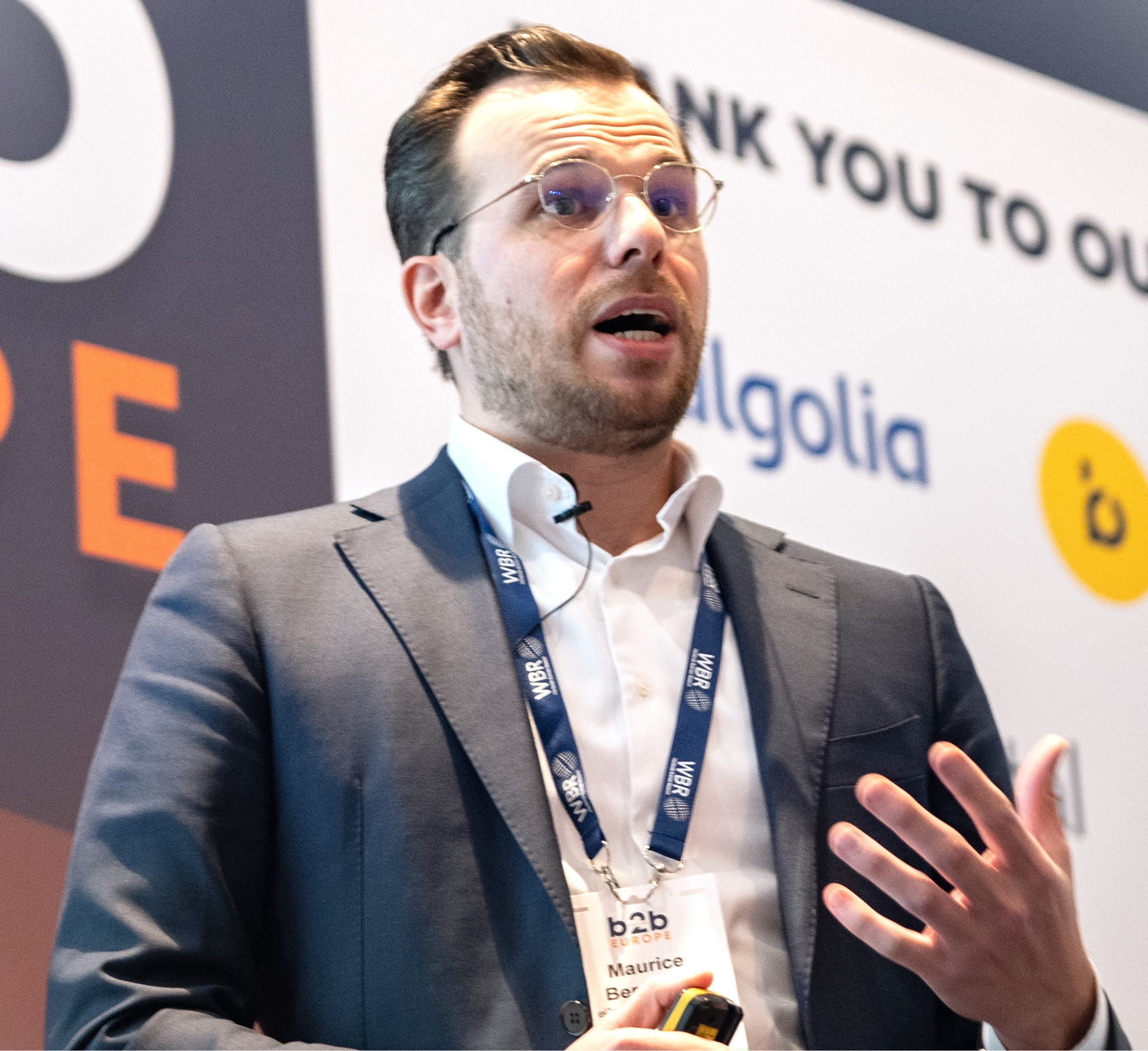
Maurice Bernards, Global Product Portfolio Manager at ABB Motion
Communities are another powerful accelerator of change. By identifying pockets of excellence and giving those teams a platform to share what’s working, ABB Motion creates regional forums where 20 to 40 people come together to learn from peers, spotlight success and spread effective practices across the organization.
I think this community is really one thing that speeds up change. Because in my team, all the questions I get have typically been answered already. So, if you have a community where people can ask questions, and someone answers it better than even I could because they're using the solutions, this is incredibly powerful.
The tooling
For Maurice, technology is merely an enabler. He cares less about specific brands and more about how well systems connect, how they reduce friction and how they change behavior.
On the front end, the ABB Motion High Power division is building a new 3D-enabled configurator that makes even highly complex products easier to understand and assemble digitally, facilitating a high degree of self-service for customers.
On the back end, AI is transforming internal workflows. A specification-reading tool now extracts key requirements from dense technical documents in minutes.
These are very complex, highly detailed documents. Normally, it would take someone potentially a couple of weeks to really go through and make sure they captured everything.
The gains are immediate, focused on internal efficiency and accuracy, and free teams to spend more time creating value rather than parsing paperwork.
On KPIs, Maurice focuses on what he can actually influence. He can’t control growth or hit rate directly, but he can shrink the operational steps that shape them — especially time to search, time to quote and quote-to-order speed. Faster quoting reliably improves both win rates and price realization, making time to serve one of the most meaningful metrics in his world.
On AI, he sees significant potential but applies a high bar to anything customer-facing. Many customers still have strict policies around AI use, and immature tools can produce unreliable answers. Until the technology is robust enough for external exposure, Maurice is prioritizing internal AI applications where the value is immediate and the risk is low.
The No. 1 rule for leading digital change in a tough business
Maurice is clear-eyed in his understanding of organizational change and its challenges. For him, the hardest part isn’t building new solutions but getting people to actually use them.
Adoption is a structural challenge, one that’s rarely solved by technology alone. Most organizations focus on the tool or the training, but not the full picture of people, processes and behaviors that determine whether change sticks.
His advice to peers is honest and grounded in experience: change requires both encouragement and accountability. Early on, you inspire people, build awareness and help them want the change. But at some point, the tone has to shift. Gentle nudges give way to clear expectations. New behaviors need to be measured, tied to targets and owned.
It’s a reminder that digital change isn’t just a systems journey. It’s a human one, shaped by motivation, resistance, confidence and the willingness to move together toward something better.
You need to talk to customers. You and your team need to be exposed to customers. I face very little to no resistance if I go to a country and say, ‘I want to talk to a customer.’
Maurice is also establishing a customer advisory board, a group of trusted customers he and his team can access directly. The goal is to cut out layers of friction, speed up feedback and keep real customer input close to every digital decision.
If there’s a final pattern in Maurice’s story, it’s that progress doesn’t come from one big transformation moment. It comes from a hundred smaller steps, each one making ABB Motion and its divisions just a little easier to buy from, sell through and work in.
There’s never been one single, standout celebration. But whenever we bring the team together, it’s always a big party and a lot of fun. For me, that’s what matters most: celebrating often, celebrating the small wins and enjoying those moments together.