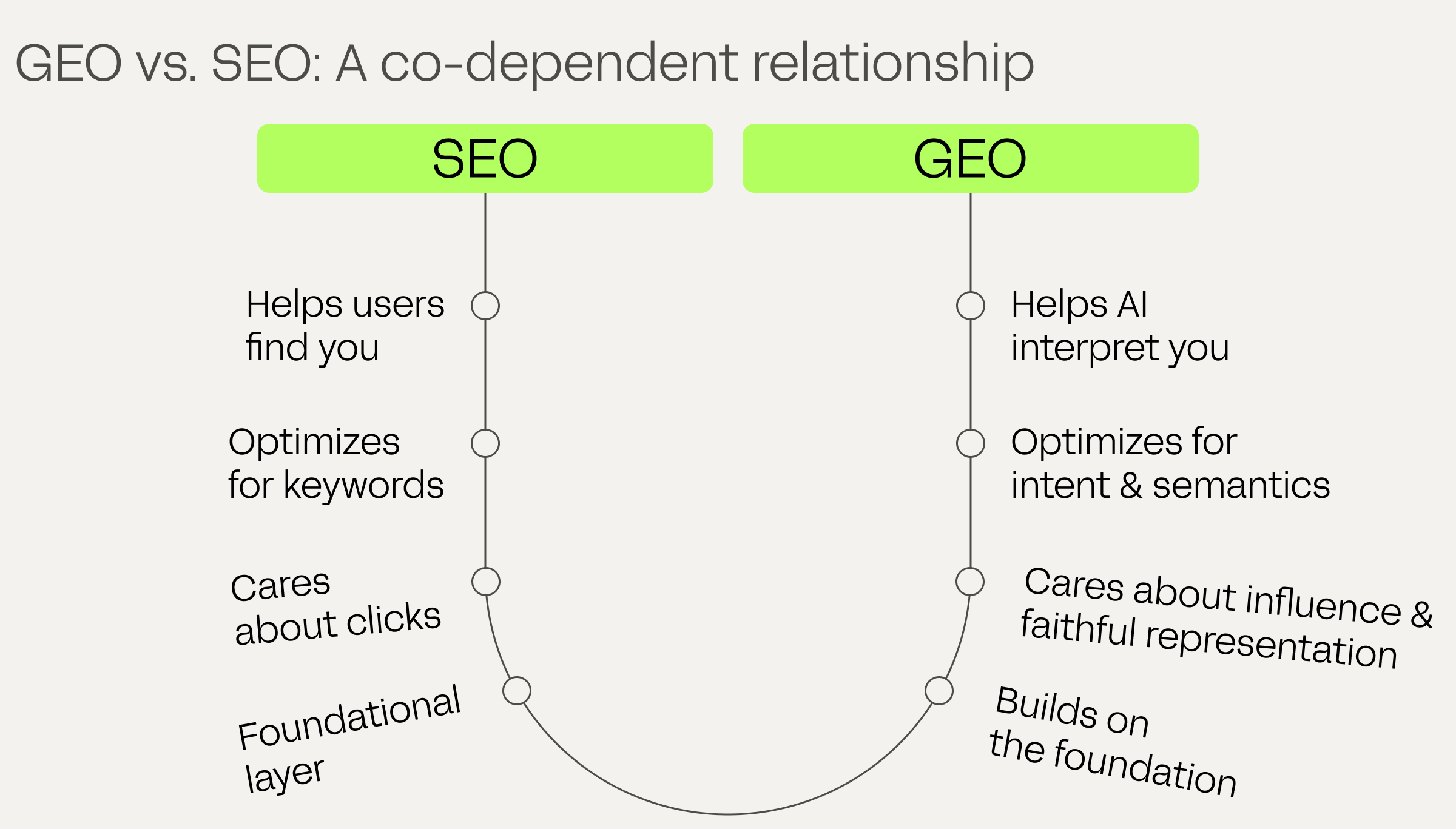
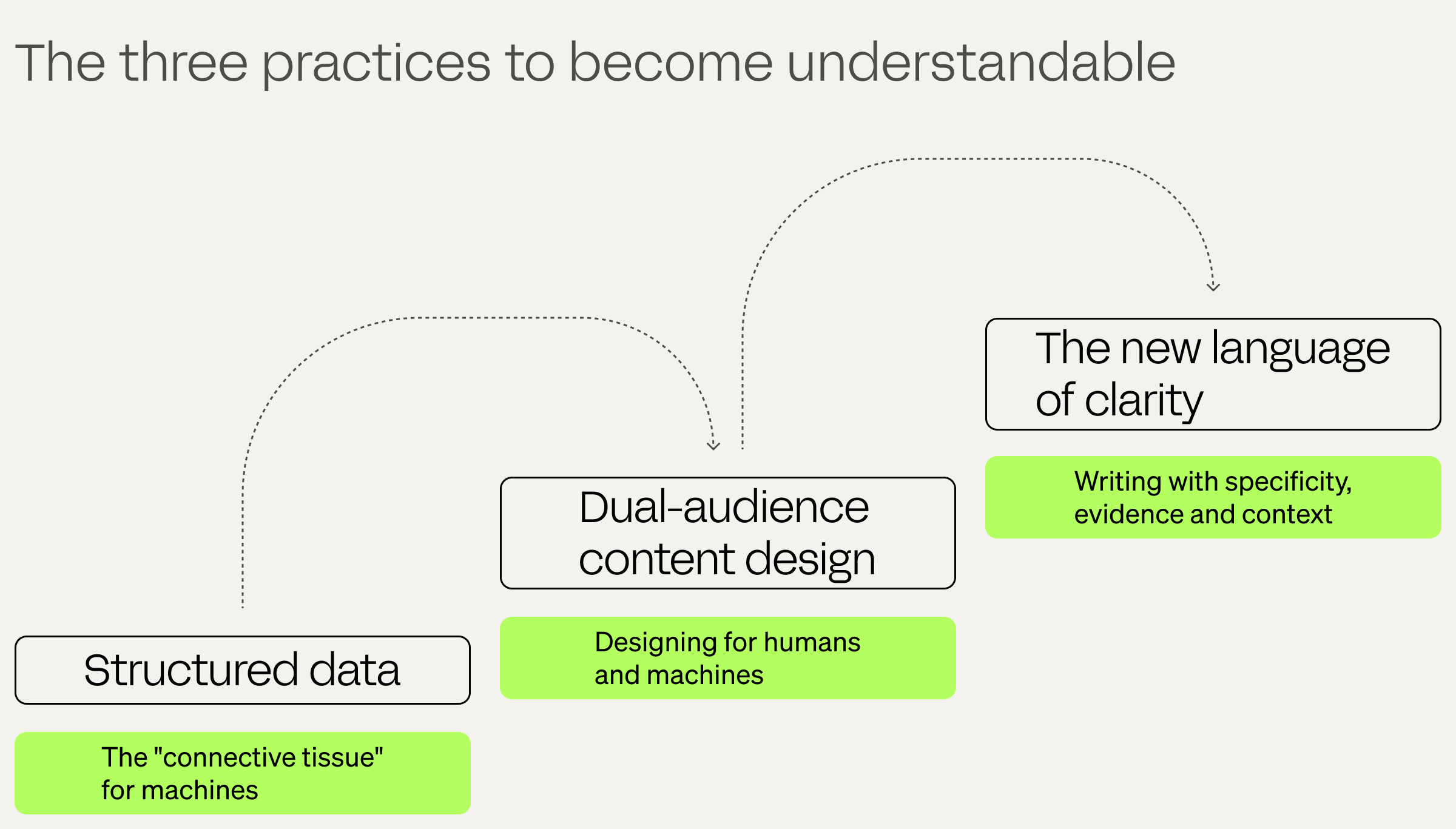
That has shifted. And if you're still thinking about digital visibility purely through an SEO lens, you're missing the biggest change since the rise of mobile.
Users aren't just searching anymore. They're asking. And increasingly, they're getting answers not from a list of blue links, but from AI systems that synthesize, summarize and serve insights directly into the conversation.
This is the era of generative engine optimization (GEO), and it’s redefining what visibility means.
We've gone from algorithms to answers
Let's start with the data.
The shift is measurable. According to Bain & Company, 60% of searches now end without a single click to a website, and 80% of consumers rely on AI-generated answers for a significant share of their searches. The traffic that does come through is worth more.
This creates a new paradox for brands with AI guarding search: fewer clicks, but higher-intent consumers who visit the website, looking for answers beyond what AI has surfaced. SEMrush, an Adobe company, finds AI-referred visitors convert at 4.4 times the rate of traditional organic search.
Generative engines like ChatGPT, Gemini, Claude, Copilot and Perplexity are becoming the new gatekeepers of content. They're sensemaking engines that don't just retrieve information; they interpret, synthesize and contextualize it. And crucially, they decide whose voice gets heard in the conversation.
The consequence is stark: “zero-click” interactions are climbing. Users find their answers without ever visiting your website. And the AI compresses the research-to-decision journey inside the chat, so the visitor who clicks arrives pre-qualified.
For digital leaders, the question is no longer “How do we rank?” It’s “How do we get understood?” and “How do we respond to the highest-intent source of traffic?”