Contate-nos

The great retail smokescreen: NRF 2026’s keynote hype vs. ground truth

Pascal Malotti
Global Retail Strategy Lead & Strategy Director at Valtech France
Emilie Robert
Global Vertical Retail Lead & Global Client Executive

março 04, 2026

A summary of NRF 2026 that nobody asked for — but the industry needs. Written one month after the show, when the applause has faded and the data has settled.

Walk the Javits Center for three days. Attend the keynotes. Visit the booths. You’ll leave convinced that retail has cracked the code. Agentic commerce is here. AI is the new storefront. Protocols are standardizing everything. The future is frictionless.

Then talk to any retailer running stores.

The gap between what NRF celebrated and what the industry experiences has never been wider. Call it the great retail smokescreen of 2026: an ecosystem telling itself a story that the data doesn’t support, the customers don’t want and the operations can’t deliver (yet?).

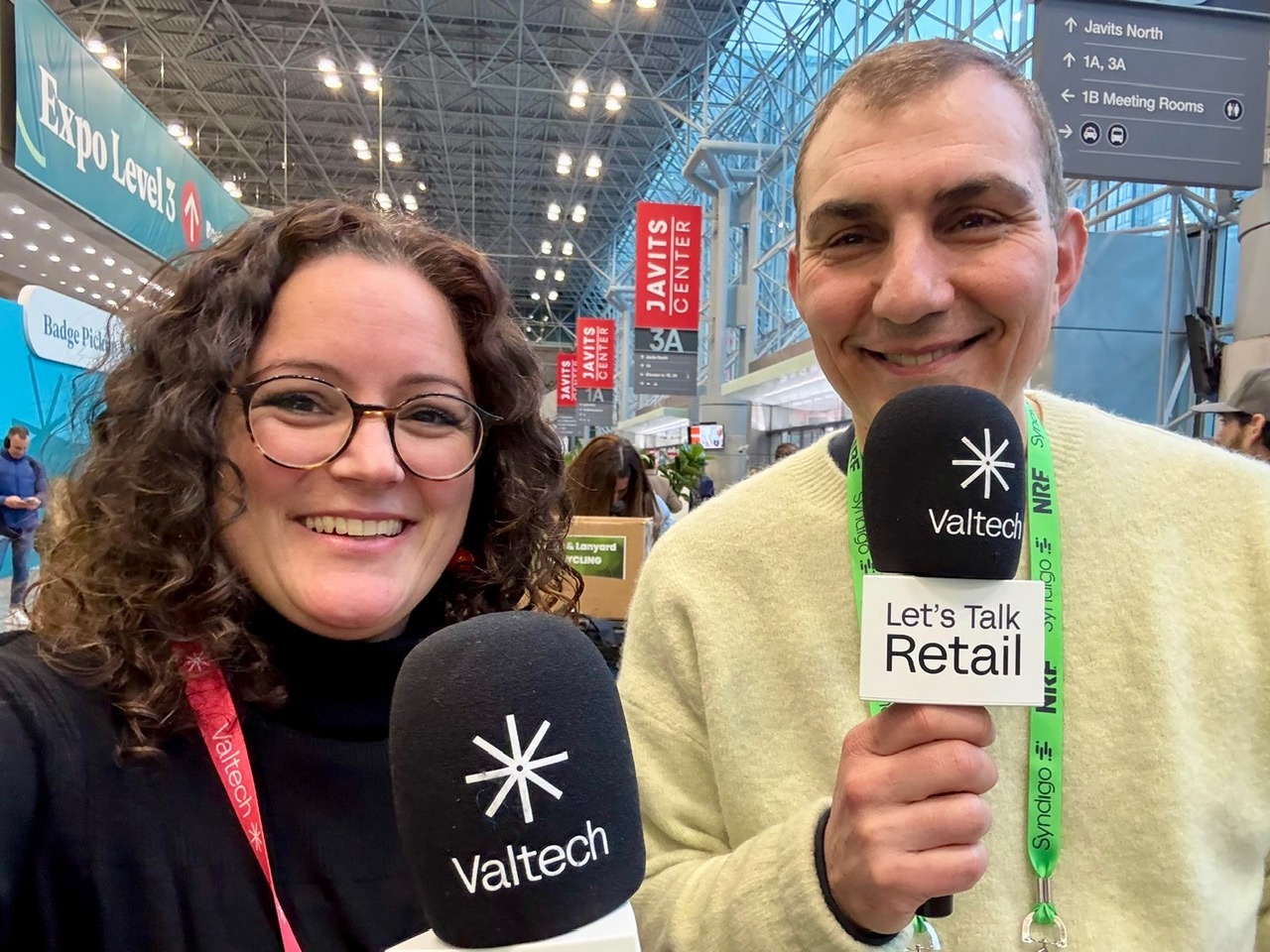
We spent the week in New York — keynotes, retail tours, conversations with executives who weren’t on stage. Here’s our round-up.

The keynote industrial complex

The headline narrative: We are entering the era of agentic commerce. Google’s Universal Commerce Protocol (UCP), OpenAI’s Agentic Commerce Protocol (ACP), Stripe’s Agentic Commerce Suite — everyone speaking the same language. Sundar Pichai was on stage to announce, “AI will reshape retail as deeply as ecommerce and mobile once did.” During Stripe’s session, 75% of attendees said they were implementing or planning agentic commerce initiatives. McKinsey projects $3–5 trillion in global agentic commerce by 2030. The ecosystem aligned.

Since the show, the chorus has only gotten louder. The Linux Foundation launched the Agentic AI Foundation. SAP announced a storefront MCP server. Google added the Agent Payments Protocol with Mastercard, PayPal and American Express. The infrastructure is real.

But here’s the thing about ecosystem alignment: It can mean collective insight or collective delusion.

The numbers nobody quoted

Only 17% of consumers feel comfortable letting AI complete a purchase. The industry is building rails for autonomous transactions that 83% of customers don’t want (at least not yet).

Only 1% of CEOs consider their AI adoption programs a “success.” Lenovo shared this at NRF, to their credit.

71% of merchants say AI merchandising tools have had limited to no effect on their business. McKinsey dropped this in a report timed to NRF. Not that 71% haven’t tried — 71% have tried and report negligible impact.

89% of shoppers verify AI recommendations before purchasing through social proof, user-generated content and earned media. Bain & Company confirms: Consumers trust brands’ own AI agents three times more than third-party agents. Trust is earned on owned ground, not delegated to protocols.

Translation: Demand is emerging. Supply isn’t ready. The gap is widening.

Protocol theater

Google has UCP. OpenAI has ACP. Google added AP2. Anthropic’s MCP is becoming the standard for agent-to-system communication. Mastercard launched Agent Pay. Visa is positioning for autonomous commerce.

Let us be direct: We’re watching a standards war before there’s meaningful adoption to standardize.

An AI agent handling checkout needs to manage payment credentials, loyalty programs, returns policies, substitution logic, delivery preferences and fraud prevention — across retailers with different rules, different systems and different edge cases. The protocol handles the handshake. It doesn’t handle the trust.

Forrester’s post-NRF analysis said it plainly: The race for platform advantage in agentic commerce is on, despite consumers not trusting agentic commerce yet.

Google and OpenAI are building highways. The traffic isn’t coming yet.

The social commerce blindspot

Here’s what NRF barely mentioned: US social commerce will surpass $100 billion in 2026. TikTok Shop alone will generate $23.4 billion in US ecommerce this year, more than Target, Costco, Best Buy or Kroger.

Globally, Flywheel Digital projects TikTok Shop at $87 billion in GMV, growing 56% year-over-year. ByteDance is on track to become the third-largest global retailer by 2030. TikTok Shop’s conversion rate is 4.7%, more than double Instagram Shopping.

During Black Friday/Cyber Monday 2025, TikTok Shop generated over $500 million in four days, with 760,000 livestream sessions drawing 1.6 billion views.

Social commerce solves the trust problem that agentic commerce can’t. When a creator you follow demonstrates a product and offers it in the same scroll, the trust is human, not algorithmic. The parasocial relationship does the work that protocols cannot. No agent required.

NRF treated social commerce as a footnote. But social commerce doesn’t require enterprise software purchases. It doesn’t need new protocols. It doesn’t generate consulting revenue. It just works.

What NRF got right

The “human-centered” theme resonated. AI as an “intimacy engine” for associates, not a replacement. 7-Eleven saving store managers 2 million hours annually. Ralph Lauren’s David Lauren on contextual styling advice as brand differentiator. These are measured outcomes, not pilot projections.

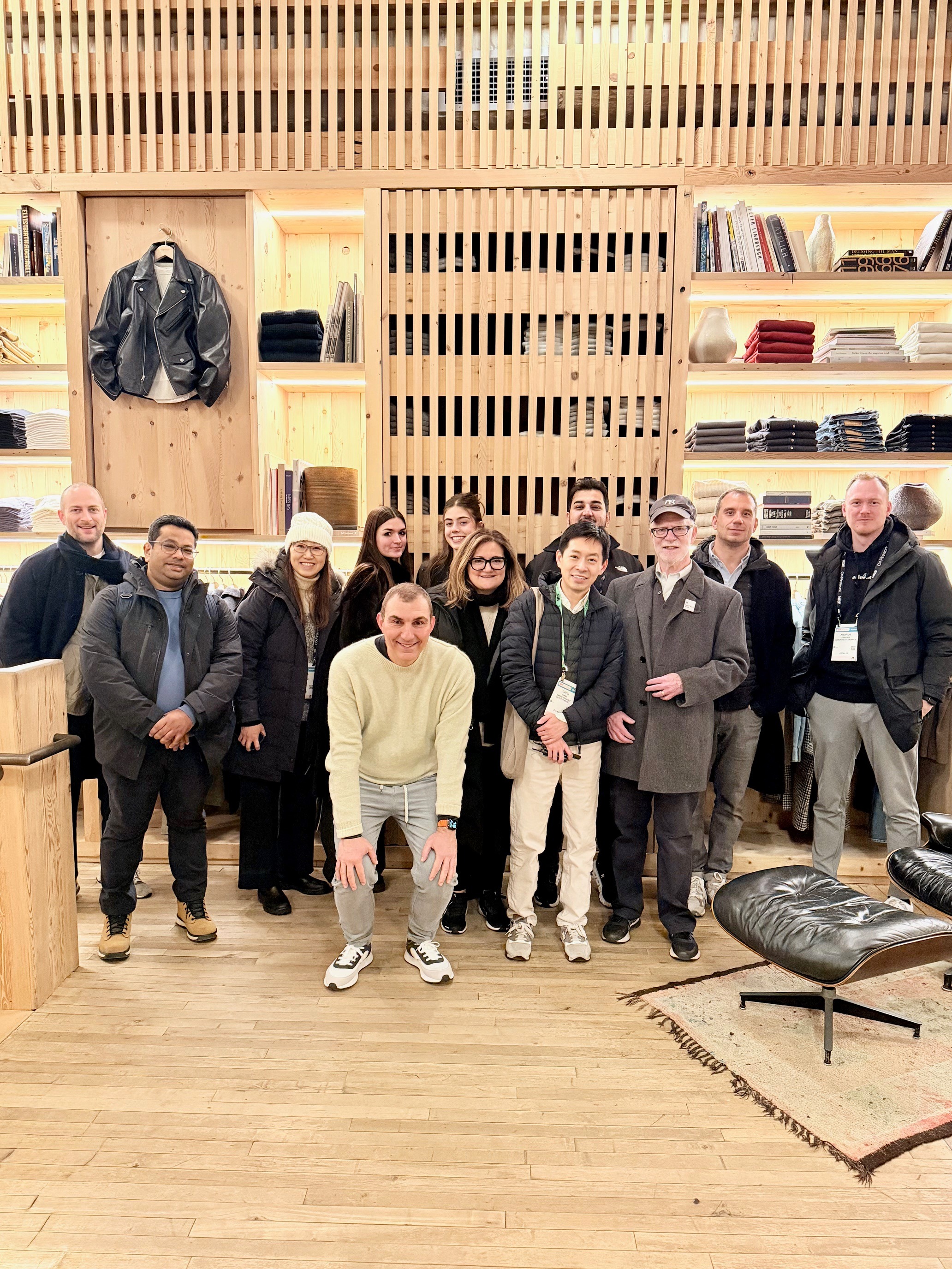
Physical stores are having a strategic moment. Our SoHo retail tours confirmed it: Premium brands are stripping tech from customer-facing experiences because AI is capturing the digital journey. When algorithms own discovery, the store owns verification.

The quiet fear at NRF wasn’t “Will AI work?” but “Where does the customer relationship live when the journey starts inside someone else’s interface?” That’s a mature question.

The real 2026 playbook: Orchestrating the gap

The industry is framing the challenge as a technology choice: which protocol, which agent, which platform. But this is the wrong frame. The real challenge is orchestration — making existing assets and emerging capabilities work together before the architecture is perfect.

This is what we call Orchestrated Commerce: the discipline of making the old and the new play together, creating value now rather than waiting for the ideal stack.

1. Build for the trust economy, not the agentic economy.

The brands winning trust aren’t removing friction. They’re making friction intentional. DICK’S House of Sport invites you to climb walls and test gear. Arc’teryx centers its ReBird repair station in SoHo — craftsmanship as theater. Glossier casts employees for their social followings, collapsing the gap between content and commerce. Bain’s data confirms it: Consumers trust brand-owned AI three times more than third-party agents.

2. Treat social commerce as infrastructure, not experiment.

$100 billion in US social commerce isn’t a test-and-learn channel. Any strategy that still treats social as a “brand awareness” play is willfully blind.

3. Orchestrate existing assets before adding new ones.

The worst mistake is the “big bang” rewrite. The second worst is multiplying integrations without reducing connectors. Create an orchestration layer that capitalizes on existing systems, integrates new capabilities progressively and enables real-time decisions without rebuilding everything. Start by auditing where shoppers drop off. Choose one friction point. Solve it in 8–12 weeks. Measure. Iterate.

4. Prepare for agent readiness — pragmatically.

We are not dismissing agentic commerce. But the timeline is longer than the keynotes suggest. The real bottleneck isn’t technology. It’s data. Tech partners surveyed by Mirakl rate retailer AI commerce readiness at 4.4 out of 10. McKinsey confirms that 61% of organizations aren’t prepared to scale AI across merchandising.

  • Now: Make your product data, catalog and APIs agent-consumable — structured, machine-readable attributes, real-time pricing and inventory, detailed specs and sustainability credentials.
  • 2027–2028: Prepare for 10–15% of orders through conversational interfaces.
  • 2029 and beyond: Build native architecture for agent-to-business interactions focused on 2–3 high-value use cases such as intelligent search, contextual recommendations and dynamic pricing.

5. Map the trust topology.

Forget omnichannel. Think in trust layers: Trust Origin (store) → Trust Brand → Trust Product → Trust Amplification (social) → Trust Transaction (social commerce) → Trust Delegation (agents).

Trust flows downstream from lived experience through brand promise and product proof, amplified socially, converted through creators and only then delegated to algorithms. Agents sit at the end of the chain, asking for delegation before trust has been built.

The takeaway

The protocols are racing ahead. The consumers are holding back. The pilots are proliferating. Production deployments are stalling. Social platforms are transacting billions while enterprise software is demoing.

The great retail smokescreen of 2026 is the collective agreement to ignore these contradictions.

The answer isn’t to choose between agentic and social, between AI and human. The answer is to orchestrate them with honest measurement and the humility to acknowledge what consumers actually want.

The winners won’t be the companies with the best AI experiments. They’ll be the ones who orchestrate the old and the new, build trust at the origin before asking for delegation at the edge and close the gap between conference narrative and operational reality.

At Valtech, this is the work we do every day. We help retailers and brands navigate the gap between ambition and execution — preparing for future activation while leveraging current opportunities through our Orchestrated Commerce approach.

Between keynote and customer lies execution. And execution is where the industry still has everything to prove.

Contate-nos

Gostaríamos muito de ouvir de si! Preencha o formulário e a pessoa mais próxima do escritório entrará em contacto consigo. 
Caso necessite de um formato alternativo e/ou apoio de comunicação para fornecer feedback, por favor contacte Sheree Atcheson.