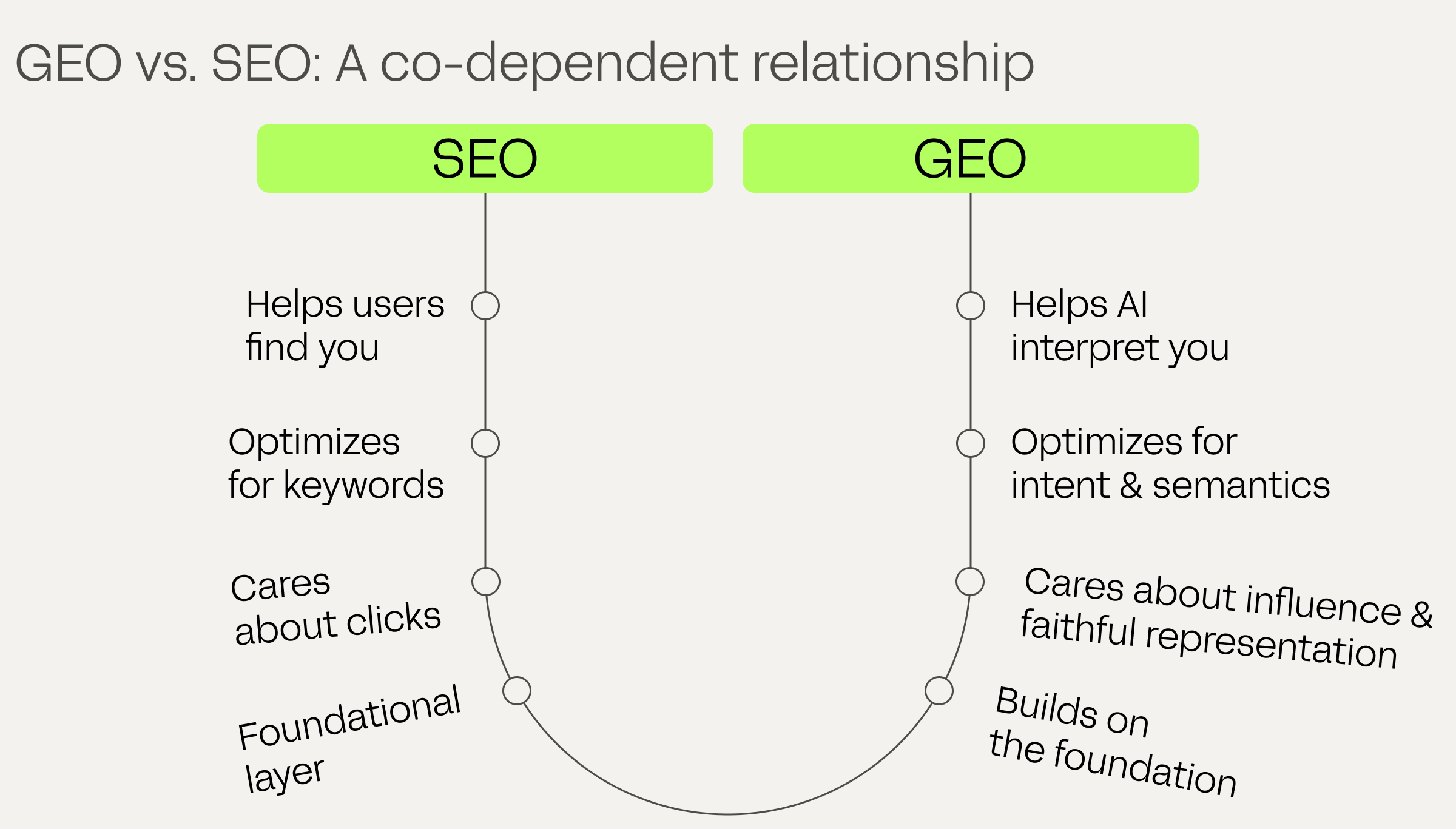
Ce paradigme a basculé. Et si vous pensez encore la visibilité digitale à travers le seul prisme du SEO, vous êtes en train de manquer le plus grand bouleversement depuis l'essor du mobile.
Les utilisateurs ne se contentent plus de chercher, ils posent des questions. Et de plus en plus, la réponse ne vient plus d'une liste de liens bleus, mais de systèmes d'IA qui synthétisent et livrent directement l'information dans la conversation.
Voici l'ère du GEO, le generative engine optimization, qui redéfinit ce que signifie être visible.
Des algorithmes aux réponses
Commençons par les chiffres.
Ce basculement est mesurable. Selon Bain & Company, 60 % des recherches se terminent aujourd'hui sans le moindre clic vers un site, et 80 % des consommateurs s'appuient sur des réponses générées par l'IA pour une part importante de leurs recherches. Le trafic qui subsiste, lui, vaut nettement plus cher.
Un paradoxe s'installe alors pour les marques, désormais filtrées par l'IA en amont : moins de clics, mais des consommateurs à plus forte intention, qui visitent le site pour trouver des réponses au-delà de ce que l'IA a déjà proposé. Selon SEMrush, société du groupe Adobe, les visiteurs venus de l'IA convertissent 4,4 fois plus que ceux issus de la recherche organique classique.
Des moteurs génératifs comme ChatGPT, Gemini, Claude, Copilot ou Perplexity deviennent les nouveaux arbitres du contenu. Ce ne sont plus de simples outils de récupération d'information : ils interprètent, synthétisent et contextualisent. Et surtout, ils décident quelle voix se fait entendre dans la conversation.
La conséquence est nette : les interactions « zéro clic » progressent. Les utilisateurs trouvent leur réponse sans jamais visiter votre site. L'IA comprime tout le parcours, de la recherche à la décision, à l'intérieur même du chat. Résultat, le visiteur qui clique malgré tout arrive déjà qualifié.
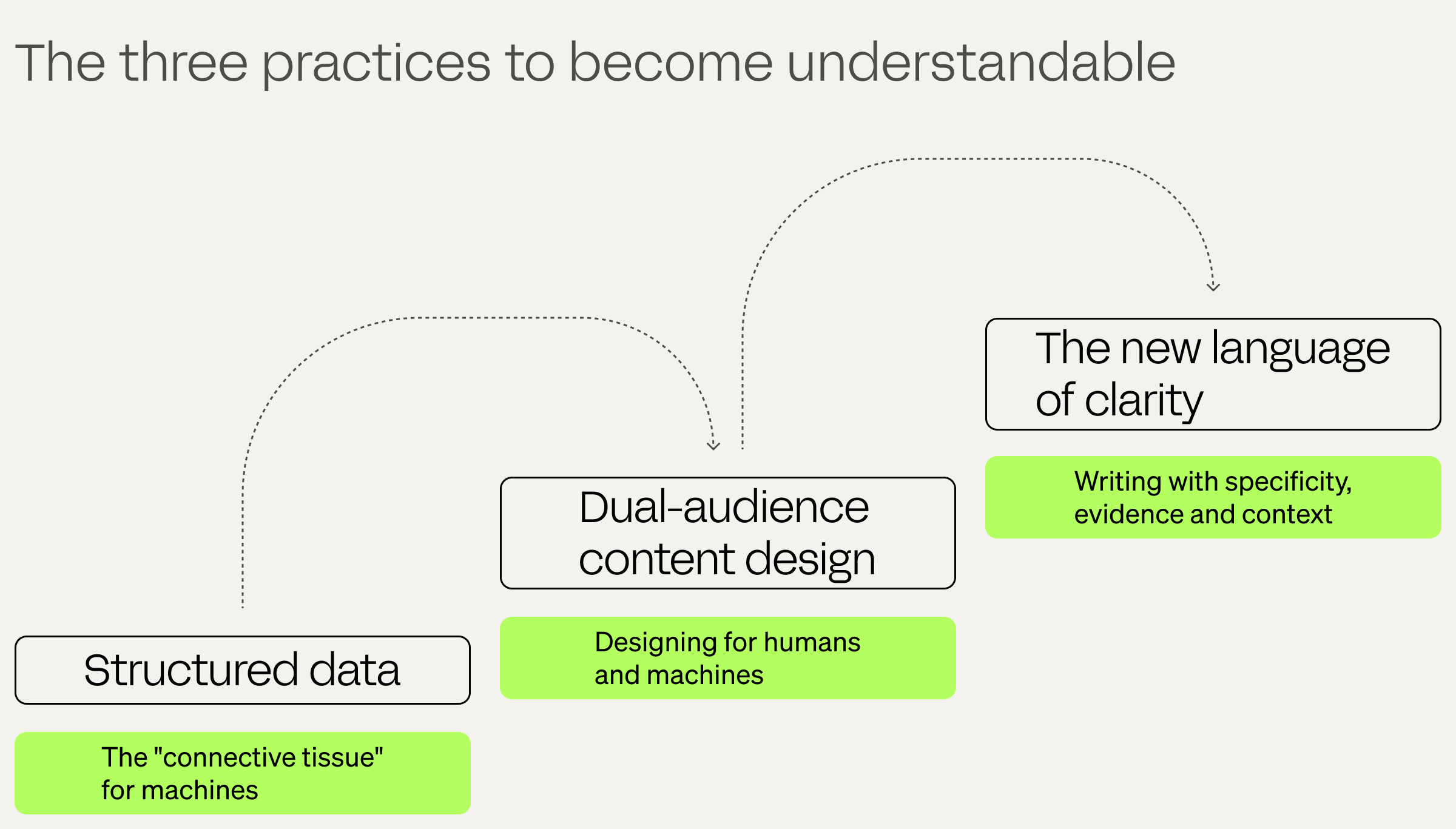
Pour les responsables digitaux, la question n'est plus « comment être bien classé ? », mais « comment être compris ? » et « comment capter la source de trafic la plus qualifiée qui soit ? ».